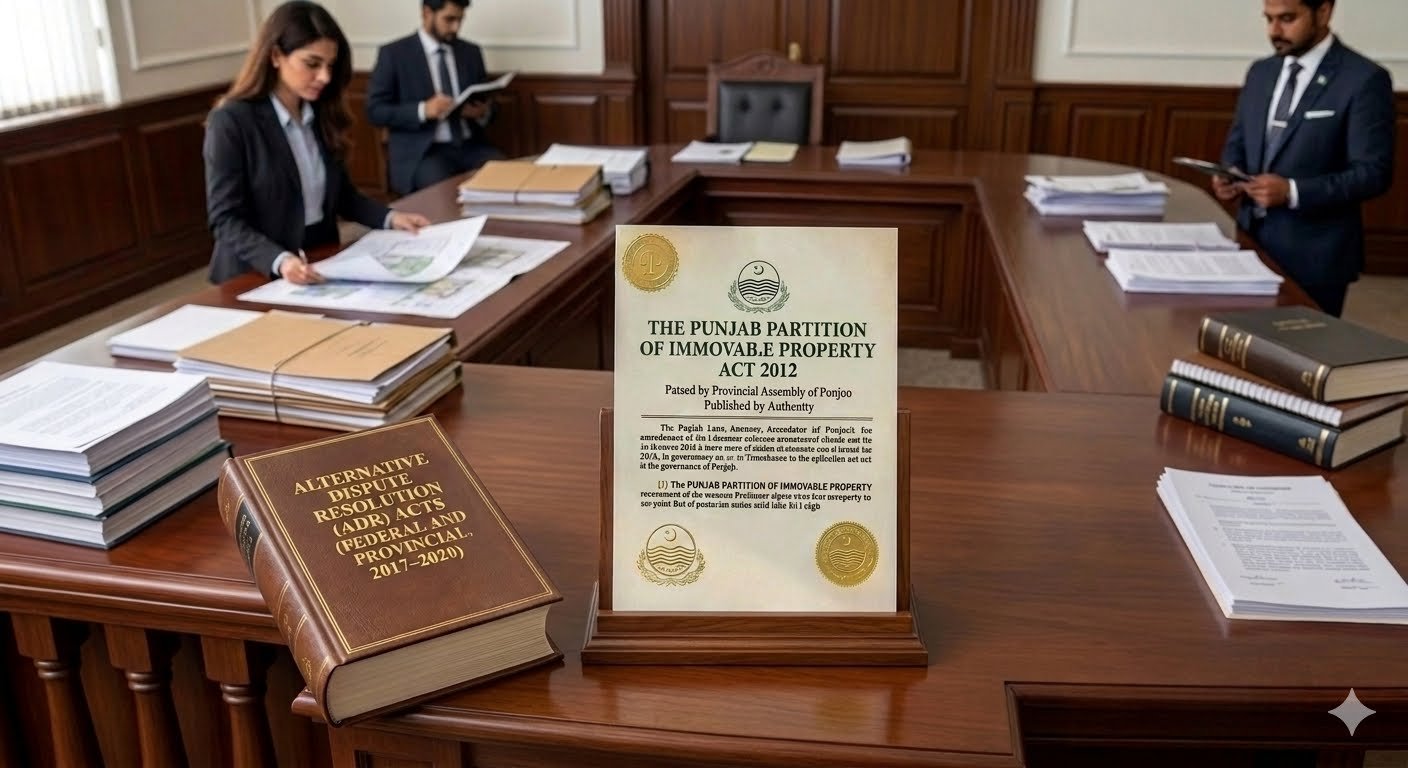

West Pakistan Muslim personal law (Shariat) application act 1962
Muslim family ordinance 1961
Prevention of anti-women practices acts 2011 pdf
Enforcement of women’s property rights act
The land revenue act 1967
The Punjab land revenue amendment ordinance 2026
Punjab partition of immovable property act 2012
The companies act 2017
Benami transactions (prohibition) act 2017
Alternative Dispute Resolution (ADR) Acts (Federal and Provincial, 2017–2020):
This 1962 law affirmed that Muslim personal law, not local custom, governs inheritance, marriage, and family matters — meant to override customary practices that often shortchanged women’s rightful shares.
This 1961 ordinance regulates marriage, divorce, and maintenance for Muslim families, including registration requirements meant to protect the rights of women and children.

Passed in 2011, this law criminalizes customs like forced marriage and depriving women of inheritance, among other practices used to strip women of their legal rights.

This law is intended to protect women’s legal right to inherit and hold property, addressing a widespread practice of pressuring female heirs to forfeit their share.

This 1967 act governs how land ownership, transfers, and records are administered and disputed across Pakistan.
This 2026 amendment updates Punjab’s land revenue framework, affecting how provincial land records and disputes are handled.
This 2012 Punjab law sets out the legal process for dividing jointly owned immovable property among co-owners or heirs.

This 2017 law governs how companies in Pakistan are formed, run, and held accountable — including family-owned businesses navigating succession.

This 2017 law targets property and assets held under someone else’s name to disguise true ownership, a tactic sometimes used in family property disputes.

These federal and provincial laws (2017–2020) established formal mediation and arbitration routes meant to resolve business and family disputes outside lengthy court battles.